
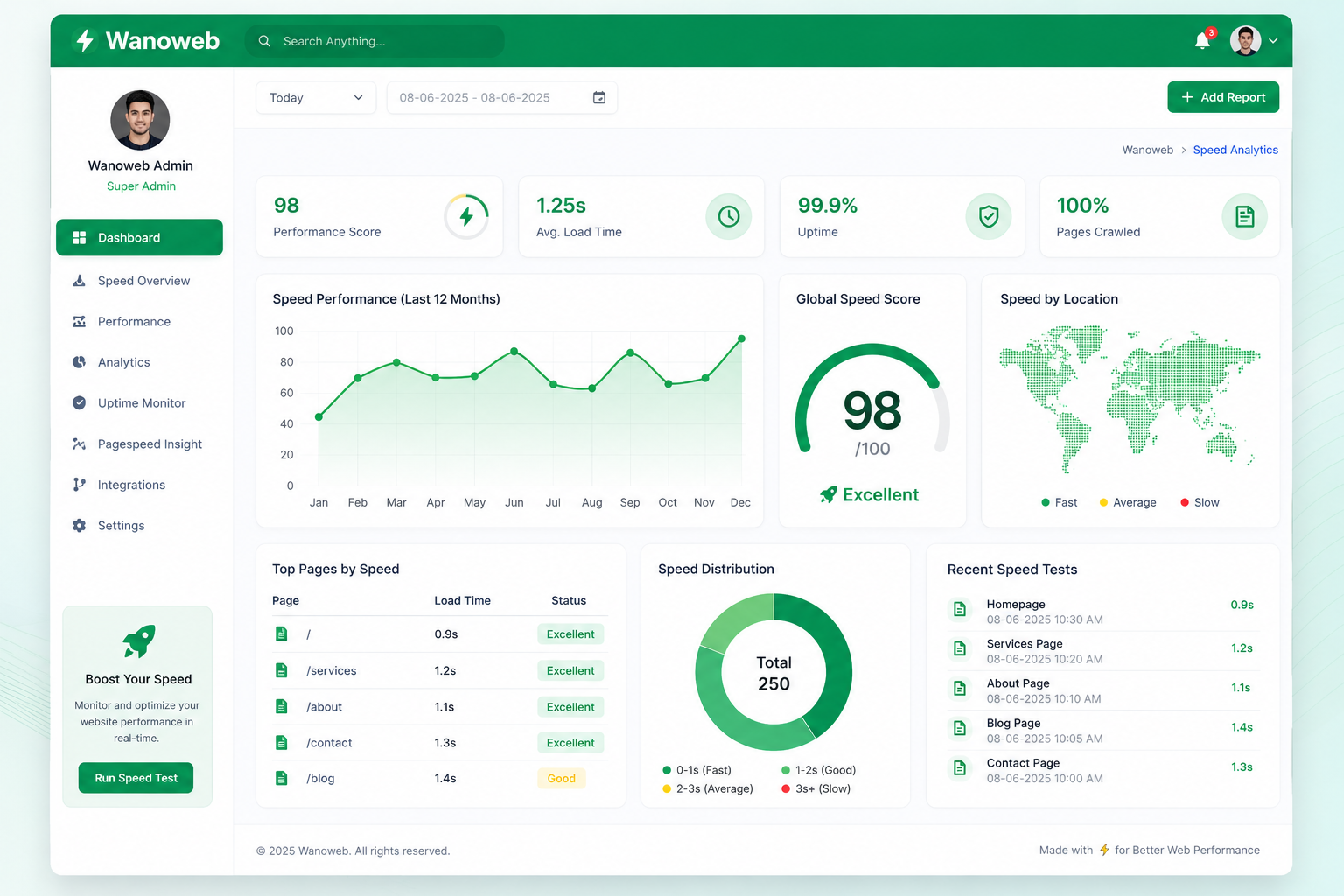

Page Speed Is Costing You Leads: What Every Business Needs to Know in 2026
Somewhere on your website right now, a potential customer is staring at a loading spinner. They wait a second. Maybe two. Then they hit back and click your competitor’s link instead.
You’ll never see that visitor in your analytics as a “lost lead.” They just won’t show up in your conversion numbers at all — because they never made it past your homepage.
This is the quiet, invisible cost of a slow website, and in 2026, it’s more expensive than most business owners realize.
The Numbers Are Brutal
Independent studies on page load time and conversions consistently show the same pattern, no matter the industry:
- Every additional second of load time can reduce conversions by roughly 4-7%
- Mobile users are especially unforgiving — a large share will abandon a site that takes more than three seconds to load
- Sites that load in around one second convert at roughly double the rate of sites that take five or six seconds
- Even improvements measured in fractions of a second — not full seconds — produce measurable jumps in conversion rate
Put simply: speed isn’t a technical detail buried in a developer’s to-do list. It’s a direct line to your revenue.
Why This Keeps Happening
Most businesses don’t set out to build a slow website. It happens gradually:
Bloated images. Product photos and banners uploaded at full resolution, never compressed, slowly stacking up page weight.
Too many plugins and scripts. Every chat widget, tracking pixel, and “one more feature” plugin adds another script the browser has to load before the page becomes usable.
No one is actively monitoring it. Page speed isn’t a “set it and forget it” metric. Sites slow down over time as content, plugins, and third-party scripts accumulate — and most businesses only notice when someone points it out.
Cheap or generic hosting. A beautifully designed site on the wrong hosting infrastructure will still load slowly, no matter how clean the code is.
It’s Not Just About Losing Visitors — It’s About Losing Rankings Too
Page speed doesn’t just affect the people already on your site. It affects whether people find your site in the first place.
Search engines factor loading performance and technical health directly into how pages are ranked. A slow, clunky site doesn’t just convert worse — it also tends to rank lower, which means fewer people ever reach it to begin with. Slow speed compounds against you twice: fewer people find you, and fewer of those who do stick around.
What “Fast Enough” Actually Looks Like
There’s no universal magic number, but a good working target for most business websites in 2026 is:
- Homepage loads in under 2 seconds on mobile
- Core pages (services, product, contact) load in under 3 seconds
- No render-blocking scripts delaying the page from becoming interactive
- Images served in modern, compressed formats rather than raw uploads
If your site isn’t hitting those numbers, you’re likely losing visitors before they ever see what you actually offer.
How to Find Out Where You Stand
You don’t need to guess. A proper website audit will show you exactly:
- Your current load time on both mobile and desktop
- Which specific elements (images, scripts, fonts, third-party plugins) are slowing you down
- How your speed compares to competitors ranking above you in search
- A prioritized list of fixes, ranked by impact — not just a generic checklist
This is exactly the kind of audit Wanoweb builds for clients: a clear, data-backed breakdown of page speed and SEO health, not vague advice.
The Fix Is Usually More Straightforward Than You’d Think
Fixing page speed rarely means rebuilding your entire site from scratch. In most cases, the biggest wins come from a handful of targeted fixes:
- Compressing and properly sizing images
- Removing or replacing unnecessary plugins and third-party scripts
- Improving font-loading strategy
- Moving to hosting infrastructure built for performance
- Cleaning up render-blocking code
Most businesses see meaningful, measurable improvement from addressing just these core issues — without touching their design or rebuilding their brand.
The Bottom Line
Every second your website takes to load is a second your competitor gets to win that customer instead. In a market where visitors decide whether to stay or leave within moments, page speed isn’t a nice-to-have — it’s one of the highest-leverage fixes a business can make to its website.
Want to know exactly where you stand? Wanoweb offers full page speed and SEO audits — pinpointing precisely what’s slowing your site down and what to fix first, before you spend a dollar on a redesign.


